Showing posts with label cancer. Show all posts

Friday, March 25, 2011

"Promise me you'll keep doing your work..."

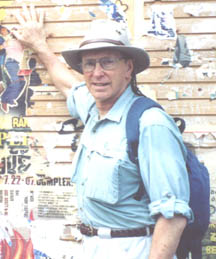
 "Promise me you'll keep doing your work," Robert said, taking both my hands in his and pressing them to his heart, looking deeply into my eyes.

It was three years ago -- end of March 2008 -- and we had learned that his body was succumbing to multiple myeloma. There were treatments we could and would try, but this conversation marked the countdown to the end, as I think back on it.

He would have one more month of health -- fatigued, but able to live the way he loved -- going to his art studio to paint, dancing joyfully, and loving me as if his life depended on it (and maybe it did). Then, as treatments failed, his back fractured in multiple places. The extreme pain led him into another world -- a world where love was not enough to heal or even ease the physical, emotional, and spiritual pain. 

A world of preparing to die.

 "Promise me you'll keep doing your work..."

Our profound sexual connection had powered our relationship for our seven, soul-soaring years together. Neither of us had ever had a relationship as sexually exuberant or as emotionally satisfying! Professionally, our spicy hot afternoon delights propelled me to switch writing topics from health and fitness to senior sex. Better Than I Ever Expected: Straight Talk about Sex After Sixty celebrated our love affair. We married in 2006, the year the book came out.


We already knew that our love wasn't "forever" the way young people think of it. Besides being seniors, we had the challenge of Robert's diagnosis -- at that point -- of leukemia and lymphoma. Our wedding celebrated not only our love, but that six months of chemotherapy had sent Robert's cancer into remission. We were told we might have ten or more good years of health, a magical gift.

But we didn't have ten years -- we had two.

 "Promise me you'll keep doing your work..."

March 2011: Two countdowns shift in my mind. In August, I'll face the 3-year anniversary of Robert's death. (When does it get easier?) But before that, in June, I'll welcome a new book into the world -- Naked at Our Age: Talking Out Loud about Senior Sex -- the book I started working on with Robert. In fact, you'll see that he wrote part of the chapter, "Unlearning Our Upbringing: Men's Stories."

I think at our age, those of us who dare to live and love fully have this balancing act between the sweet surprises and rewards of living our dreams out loud and the inevitable losses. Robert gave me the right advice: "Promise me you'll keep doing your work." It sustains me and brings me great joy -- as does sharing it with you!

Monday, June 14, 2010

Viagra "not a sack of cement installer"

I'm writing the chapter about cancer and sexuality for my new book, Naked at Our Age: Talking Out Loud about Senior Sex. The stories people sent me about reclaiming their sexuality after cancer treatment fill me with admiration. I looked back at some older posts on this blog that deal with sex & cancer, and decided to bring back this one from 2006. With the prevalence of Viagra use, I think BillyBob's experience and his thoughts about it are important. - Joan

BillyBob, age 62, has told some of his story previously as a comment here. He recently sent me an email detailing an experience that he wants to share -- and he makes an important point:

I started dating a lady I have known for a year, mostly through phone conversations. I knew that she likes sex. Last weekend we went for dinner. After dinner she wanted to go back to my place for a while.

Well, as it turned out, it was the most embarrassing time I have ever had, all because of a misconception some woman have about impotency.

I took a Viagra after we got back to the motel hoping it worked fast! It did its normal thing and got me sexually aroused but not 100%. She knew I had to take it because of the prostate cancer killing my prostate.

Here is where the misconception comes in. It seems that women who do not know about Viagra seem to think if you take it you just get ramrodding hard, and they do not need to do any stimulation. Well that’s just plain wrong. Men still need stimulation along with the Viagra. The drug is not a sack of cement installer.

And I was not about to masturbate myself in order to get it hard. Not in the presence of a woman.

So as it turned out she turned me off instead of on. What a bummer. It was so disappointing. I had looked forward to our meeting for some time. And the possibility of finally enjoying good sex with some one that likes sex.

All a woman needs to know about the drug is that you do things as normally, using stimulation together. So please tell your readers what my experience was.


BillyBob, thank you for sharing this experience. Viagra helps when there's a physical cause for lack of erection, as you know, but it doesn't increase libido, or substitute for all those other crucial components of good sex that you (and I, and probably everyone reading this) crave -- touching, kissing, bonding, stimulating each other physically and emotionally, enjoying each other's pleasure as well as our own.

It sounds like most of this experience was missing for you. What a bummer, I agree. I'm sorry you didn't feel you could communicate your needs and desires to your partner -- I don't know, maybe she would have been happy to help you get aroused if she had understood. It's hard to understand why she didn't seem interested in stimulating you just as part of the sex play (with or without Viagra), since that's a good part of the fun of sex.

I know you were too embarrassed to masturbate in front of her when she didn't help arouse you, but as a woman, I find it very pleasurable and exciting to watch a man stimulate himself. I don't know if your partner would have reacted this way, but I'll bet she would have.

If you see a future or at least a repeat date with this woman, I hope you'll communicate candidly with her before you get to "the act." And please continue to write.

Thank you again, BillyBob.

-- Joan

Thursday, December 24, 2009

Sex after prostate surgery? Anne Katz answers reader's question

Cancer -- not a sexy topic, and not what you'd expect me to write about on Christmas Eve. But cancer knows no seasons and respects no holidays. Maggie, age 62, wrote to me:

Recently, I met a nice guy who after dating for a while, told me that he had surgery for prostate cancer 7 months ago. He went on to tell me all the bad news that the Dr. had told him about side effects. My question is, do you know any where that I can get some straight answers on what we are looking at, possibility wise? The information I have found online so far has been very negative, almost always putting the pressure on the woman if things were going to work or not. He advised me that he would never be able to have an ejaculation & that sex for him would never be the same. I got the idea that he would never feel the pleasure of having a climax again. My fear is that if this is true, what would be the point of him having sex? I am a very sexual woman & would just like to know if there is any chance that there can be a sexual relationship? Any guidance that you could offer would be greatly appreciated.

I sent Maggie's question to cancer and sexuality specialist, Anne Katz, RN, PhD. Here is her response:

There are a number of possibilities in this situation, some of them good and some of them not so good. Here are the facts:

1. Having surgery for prostate cancer (a radical prostatectomy or complete removal of the prostate gland) will result in significant changes in a man's ability to have an erection. Depending on what his erections were like before the surgery and the amount of damage done to the nerves responsible for erections during the surgery, the man may be able to have erections after the surgery but he is most likely always going to need some help (from medication like Viagra, Cialis or Levitra). These medications only help about 50% of the time but there are other erectile aids (the vacuum pump or penile injections) that can help too. Some men are able to have an erection but it may not last very long. Some men can only achieve a thickening of the penis and this may not be sufficient for penetration. Progress in regaining erections may continue for up to two years after surgery but what he has at that point is usually as good as it is going to get.

2. Orgasms are still possible, even with a flaccid penis. The orgasm will not be accompanied by ejaculation however (the prostate gland makes the fluid portion of the ejaculate and so when it is gone, so is the emission). Some men report more intense orgasms after this surgery; some say they are much less intense.

3. Libido (or sexual desire) is not affected by removal of the prostate but the mind is a very important part of a man's sexuality. Repeated failure to have an erection sufficient for penetration may cause him to lose some interest. Although some men just keep on trying and trying and trying - the human spirit is a powerful force and many men retain hope for many years despite little success.

4. Many couples find a way around these difficulties. There are more ways than just penetration for both the man and the woman to achieve orgasm and satisfaction and some creativity goes a long way. This may be challenging for a new relationship. But the lust and attraction in a new relationship may also provide more impetus than a 30 year relationship! There is no right way or wrong way in this; a lot depends on how you want to look at the situation.

5. If you read anything that you feel puts the onus on the woman (or male partner) to fix things, then stop reading! This is a couple's issue and both partners have to work on finding a solution. Communication is a very important part of sexuality. You should be able to talk openly about what works for him and what doesn't. You should be able to talk about what you want and what creativity you can both bring to sexual activity. In your letter you state that you "got the idea" - you will have to ask questions and not rely on innuendo to help you understand what is possible and what is not.

New relationships are challenging and exciting and inspiring and joyful. When illness or injury have occurred it puts a lot of pressure on this new partnership. Good luck!


Anne Katz, RN, PhD, is the author of the award-winning text book Breaking the Silence on Cancer and Sexuality: A Handbook for Health Care Providers . Dr Katz has also written three books for consumers: Sex When You're Sick: Reclaiming Sexual Health after Illness or Injury; Woman Cancer Sex, and Man Cancer Sex. She is the sexuality counselor at CancerCare Manitoba in Winnipeg, Manitoba, where she provides counseling to men and women experiencing sexual difficulties as a consequence of cancer and its treatments. Visit her website at http://www.drannekatz.com/.


Tuesday, September 22, 2009

Aggressive prostate cancer treatment saved his life

Neil, age 74, who wrote his Personal View of Prostate Surgery and Sex here, wants to add this:

I hope I did not leave the impression that I am anti-physician. I do not want to imply that my caregivers were incompetent or uncaring. I certainly don't think anyone lied to me. I am blessed with a caring and extremely competent urologist who has given me nine years free of prostate cancer.

The urologist was aggressive in treatment. Tests were conducted well before my PSA even reached critical numbers. Normal range is 1 to 4 -- mine was a little over 2. The disease was caught early because of a very dedicated doctor.

My urologist routinely spends 12 to 14 hour days in the battle against cancer and has very little personal time. I am grateful for what was done for me. My physician, by the way, was not the person who gave the word that sex didn't matter after 55. That was a second opinion guy at another medical center.

I suppose the myths and lack of information come from two areas:
(1) The work load of dedicated health care professionals is unbelievable. When faced with a choice of saving life or providing sexuality education, I would want my doctor to first go after the cancer. I was very grateful my urologist did just that. I am here today because of this priority.
(2) While some counseling was given, my physician candidly stated that not much training was given in matters of sexuality. There simply was not enough time for everything. I believe that. As I have talked to other urologists, the story is the same. There is just not enough time to get everything into the program of study.

I am sure that we, as sex educators, have some responsibility to assist in making things better. Perhaps more of us will somehow find our way into relationships with medical school faculties. Hopefully, we can also raise awareness that would provide support to local medical groups as well. I would hope that we could be of assistance to the medical profession without getting in the way of their very important clinical work. I am sure that your book will also provide more information that can be placed in the hands of the health care community.

Above all, I want to leave the message for men to find a competent urologist and stay with their professional judgment. This stuff is nothing to mess with or take lightly. I prefer that we work hand in hand with health care professionals in the battle against cancer as well as the enhancement of sexuality.

Sunday, September 20, 2009

Personal View of Prostate Surgery and Sex

Neil, age 74, offers this startling information about sex after prostate cancer surgery. I'm grateful to Neil for his willingness to share his personal story:

A diagnosis of cancer is very frightening. For me the journey was scary enough without the myths and misinformation I was told about cancer of the prostate. I share my experience in the hope that this information will be of help to others.

Myth # 1: “After Age 55, Sex Doesn’t Matter That Much Anyway.”
I heard these words from a physician who specializes in the treatment of prostate cancer. A very nice person, considered extremely competent, he believed his words would be comforting. They weren’t!

Sex does matter after 55. I promised the doctor that I would look him up on his 55th birthday and tell him to “cut that out.” He sheepishly smiled and said, “Oh my. I think I said something wrong.”

Myth # 2: “What You Have At The End Of A Year Is What You Get.”
Although many men are told that any rehab after prostate cancer treatment will peak in twelve months, every case is different. Some methods of prostate cancer treatment can result in serious damage to sexual performance. On the other hand, robotic surgery and nerve sparing have greatly improved sexual potential. Whatever the case, don’t give up! There are options for almost every case of sexual impairment.

But I must warn about some of the product advertisements that flood the market about penile enhancement, instant erections, and so on. Some of these products can be harmful to a cancer survivor. Some are loaded with testosterone which can cause further growth of prostate cancer. Check with your physician before trying any of these medications.

At all times, keep your partner involved in the options you’re considering. They can be our most precious friends and supporters. They deserve to be part of the solution to our new life experiences.

What We Are Often Not Told:

The penis will be about an inch shorter after surgery. Because the urethra passes through the prostate, when the prostate is removed, that portion of the urethra is removed as well. Then, when the urethra is resectioned, the penis is drawn in towards the abdomen. Secure circumcised males seem able weather this storm but uncircumcised males have an additional problem. The surgery leaves more foreskin than before. This additional tissue traps urine and produces odor. Baby Wipes do a very fine job of solving this problem. They are easy to carry and save a lot of embarrassment.

The “Missionary” position usually is no longer successful after prostate surgery. Because the prostate stabilizes the penis and prevents it from receding into the abdominal cavity, removal of the prostate decreases penile stability. The angle of the vagina, coupled with a shortened penis with no internal stability means vaginal intercourse may not work. However, “Doggie Style” and “Woman on Top” work just fine.

I welcome feedback about the experience of others regarding sex and prostate surgery!


9/22/2009: Neil added these comments about how his urologist saved his life.

Tuesday, March 11, 2008

Sex and Intimacy after Cancer

If you or your partner has been diagnosed with cancer, what part does sexuality play in your quality of life? How will cancer treatment impact your sexuality -- physically and emotionally? How do you cope with changes in function, libido, body image, and pain? How can you maintain intimacy in the face of these challenges?

“Sexuality is all about who you are as a man or a woman,” says Sage Bolte, MSW, LCSW, OSW-C, a renowned authority on sex and intimacy after cancer and an oncology counselor at Life with Cancer®, an Inova Health System service in northern Virginia. “It’s a critical part of your quality of life.” Sex and intimacy are key ways to affirm, “I’m alive, I’m human,” and of getting back what was important to you before cancer.

On March 11, 2008, the Leukemia and Lymphoma Society presented a teleconference with Bolte for 1,400 listeners. It was superb. Fortunately, the teleconference will be available as a transcript and MP3 recording sometime in April 2008 at www.lls.org/survivorship.

Forty to 100 percent of people with cancer will experience some form of change in sexual function, says Bolte, which can impact willingness to engage in sexual activity. However, she assures us, “Patience and techniques can help you regain a sense of sexual self and confidence.”

Although Bolte’s message was targeted at the special challenges of cancer, all of her suggestions also apply to living with any chronic or life-threatening illness, as well as the sexual challenges of aging itself. Here are some of her techniques for coping with specific problems:

Vaginal dryness and discomfort: Apply 100% vitamin E oil to the vaginal tissues and clitoris on a regular basis after showering, and use a water-based lubricant as needed during sex. Talk to your doctor about whether an estrogen ring or testosterone patch would be appropriate to regain moisture and restore elasticity of the vagina.

Erectile dysfunction: Tell your physician about this problem and have him/her look at all your medications. Have your testosterone levels checked. If you’re having a harder time maintaining an erection, try finding the positions that is most stimulating for you. Help your partner reach orgasm before intercourse. Devices for men that may help include penile pump; penile injections, suppositories, penile implant, penile rings. But if you’re on blood thinner or have low platelets, you need to consult with your physician before using any of these devices, because they might put you at risk. Viagra and similar medications are not recommended for men who have heart concerns or are taking blood pressure medications.

Pain and fatigue: After cancer treatment, the time of day that’s right for sex might change. If you’re too exhausted in evening, switch to morning or have a special lunch break. Take pain medication 30 to 60 minutes before activity. Get exercise, which can minimize fatigue and assist in decreasing some joint pain. “Remember that we can rest during sex,” says Bolte. “It’s not a marathon.”

Fear of rejection: Consider seeing a couples counselor or sex therapist. Often the problems of miscommunication, misinterpretation, and anxiety get in the way of your sexuality and intimacy. Work on your communication skills. (Note: I’ll be writing more on this topic in another post.)

Difficulties reconnecting with your partner: Communicate your own desires, ask for what you need, and ask your partner to communicate honestly, too. Be affectionate. Take it “slow and easy.” Take time to be together and to connect. Find other ways for both of you to have pleasure.

Redefine your expectations,” suggests Bolte. “Sometimes you can’t get back to the function you had prior to cancer, but that doesn’t mean it can’t be good or pleasurable.” Focus on touch, sensation, pleasurable feelings. Use sex toys. Engage in mutual masturbation. Read fantasy to each other. Touch yourself. Massage each other and cuddle.

“Take more time to get stimulated, talk yourself into sex,” Bolte recommends. Realize that instead of the physiological response coming first and driving the emotional response, it may need to be the other way around, a “mind thing first.” Schedule your sex time – plan it, think about it, fantasize, and work yourself up to the mental excitement that will stimulate the physical excitement.

Don’t let sex feel like pressure to perform. Sometimes practice just touching without the expectation of intercourse. Re-explore alone what feels good to your body now. “Start with self-pleasuring experiences,” says Bolte. “Your body has changed since treatment. You need to be comfortable touching yourself and knowing what feels good now.”

I applaud the Leukemia and Lymphoma Society for recognizing the importance of sexuality to people diagnosed with cancer and Sage Bolte for generously providing her expertise.

Thursday, September 6, 2007

Intimacy after prostate surgery


Several readers have posted and emailed me about sex and intimacy after prostate surgery. I asked Anne Katz , RN PhD, author of Breaking the Silence on Cancer and Sexuality: A Handbook for Health Care Providers and sexuality counselor at CancerCare Manitoba in Winnipeg, Manitoba, to respond to a common question:


Ever since my husband had his prostate removed because of prostate cancer, he has been reluctant to touch me. This is so upsetting. I love him very much and don’t know what to do.

It is common for men to be unable to have an erection after this surgery. Depending on the type of surgery (nerve sparing or not), his ability to have erections may or may not return. Many men are deeply distressed by this and may avoid all physical contact with their partner so as not to “lead them on” or disappoint them. This leads to a very unhappy partner who wants to express his/her love and support but feels cut off and cut out.

What is important is for the couple to TALK. It is often really difficult to talk about a sensitive topic when emotions are running high. But talking goes a long way to healing and connecting. Start with an “I” statement: “I miss touching you and being touched by you. How can we reconnect again?” Or perhaps: “I love you so much and want our relationship to be the way it was before the surgery. What can WE do to help this happen?”

While there are medications and treatments that may help, further treatment should be a couple’s decision and the man should always include his partner in medical appointments so that both people can express themselves and have their questions answered. Because communication is so important, the couple may need professional help to start the communication flowing. But seeking help is the first step.


For more posts about cancer and sexuality, please click "cancer" in the "labels" list in the right-hand column.

Is this helpful? Let me know what questions you'd like me to explore as we age and encounter physical and emotional challenges to our sexuality.

--Joan

Thursday, July 26, 2007

Gerald Haslam talks about prostate cancer and sex


Gerald Haslam, author of Grace Period, is living with prostate cancer. He wrote a stunning summary of his views of the importance of sexuality while living with cancer for my upcoming book. I know I have many readers who are looking for information on sexuality and cancer, so I'm giving you an advanced look at some of the insights he shared:

A seventyish man who was recovering from a prostatectomy asked fellow members of a prostate-cancer support group how they could have sex if they were leaking urine. He ended with a timeless observation--"My wife is willing to be pissed off but not pissed on."

Despite the laughter that followed, his was a serious problem, but the first response solved it: "Put a band on your penis --a cock ring. A lot of older guys who aren't incontinent use them to maintain erections, but if you're leaking they're a good answer, especially if you use a pump."

The first man was honest enough to admit, "I hadn't thought of that. We've never used any...devices. Of course, I've never had prostate cancer before, either." In fact, the prostate cancer world introduces many guys to devices and positions and concepts previously unimagined.

A physician pal said to me shortly after I was rendered impotent by prostate surgery and radiation, "You'd better start pumping up your penis every day, whether you're going to use it right away or not, or it'll shrivel into a Vienna sausage. As soon as you lose spontaneous erections you lose penile tone. No tone, and there'll be nothing to pump when you do want to use it."

In fact, sex seems to be the second most common topic--after cancer therapies--in discussions at most prostate cancer support groups, and I learned that many men, rendered impotent and perhaps stripped of libido by hormonal ablation, simply but not happily accepted the verdict that their sex lives were over, a defining activity lost. A dread frequently mentioned to me by my fellow prostate-cancer survivors has been not only the sudden absence of sex but of sexuality itself. This is especially grave since sex and sexuality can represent the life force's most powerful affirmation in the face of death.

Unfortunately, many of us men grow up believing that our sexuality dwells almost exclusively in our genitals, so a damaged penis may lead to a damaged personality. As one wife admitted at a session for couples, "There's not much fun in our lives anymore, and I don't just mean sex. He's just so sad." A penile fixation may also lead one to forget how much sexual satisfaction can be achieved by giving pleasure to a partner you love.


Please read my review of Gerald Haslam's Grace Period. Click here to view or order Grace Period on Amazon.

Sunday, April 22, 2007

Does Your Doctor Talk to You about Older-Age Sexuality?

Have you ever consulted your doctor about your changing sexual responsiveness or about reclaiming your sexuality when you have a medical condition that makes sex more difficult?

What happened when you asked your doctor for advice about sex? How did he or she respond? Did you get the information you needed? And for the benefit of the medical professionals reading this -- how would you have liked your doctor to respond to questions about sex? What advice would you give professionals about how and when to talk to their older patients about their sexuality?

I am planning to write a magazine article about this topic, so please feel free to comment here or email me and let me know if you'd be willing to be interviewed.

As background, I wrote the post that follows in March 2006, and I'd like to revive it now that I have many more readers. I invite your comments.

[post originally dated 3/29/06:]

I've been speaking to groups in the midwest and the San Francisco Bay Area, and corresponding with readers who send me emails. Over and over, this comment comes up: older-age sexuality is a huge gap in the education of medical professionals.

I keep meeting doctors, nurses, therapists, and alternative practitioners who are hungry for information for their patients and clients -- and often for themselves. One woman's eyes got teary when she said, "I've been so lonely wishing I could talk to someone about this."

I've heard from women who have read my book and ask, "Why didn't my doctor ever tell me that I have to 'use it or lose it'?" These are usually older women who are not in relationships right now and didn't realize the importance of internal massage, regular orgasms, and Kegels to keep their vaginas tuned up and healthy, or penetation in the future might be painful. (For more information about what to do, read Vaginal Rejuvenation & Health from
A Woman's Touch, a wonderful sexuality resource center which I had the pleasure of visiting in Madison and Milwaukee.)

I'm also talking to many women over sixty who didn't know that lubricants and sex toys can enhance their sexual pleasure -- solo or with a partner -- by heightening arousal and speeding up orgasm. They thought that slow arousal and difficulty reaching orgasm were a part of aging that they had to accept. I'm distressed that many doctors tell women this -- often without running tests to see whether hormone levels or other conditions which may be treated might be affecting sexual response.

I'm not dumping on doctors, just on their training. I've been thrilled by the response of medical professionals to my book. One Santa Rosa, CA gynecologist bought 14 copies of my book for her patients -- and then, after she had given them all away, she bought 10 more!

Several readers have written in about their medical challenges since this post originally appeared. To read more on this topic, check on "medical attitudes towards sex and aging" or "cancer" in the "labels" column to the right, and you'll see other related posts.

Friday, February 23, 2007

Sex and Older Bodies

I invite you to read my second column for Suddenly Senior: Sex and Older Bodies: Tips, Tools, and Tricks that Work! Here's an excerpt:

I‘m often asked in media interviews for tips for great senior sex. Here's what has worked for me:

1. Communicate. Tell your partner what you're feeling, or not feeling, and describe what would make sex better or more comfortable for you. Your partner wants to understand and please you.

2. Take lots and lots of time. We need more time to become aroused and make the delicious journey to the crashing waves. Set aside a couple of hours so you have time for the full experience, from the first kiss to the afterglow cuddle.

3. Find positions and props that enhance your comfort. A special shaped pillow like the Wedge and a silky lubricant can make all the difference in comfort!

4. Explore erotic helpers. I wrote a whole chapter on sex toys in Better Than I Ever Expected: Straight Talk about Sex after Sixty, including divulging my favorite.*


* I didn't go into more detail about my favorite in my Suddenly Senior column, but I'll tell you here -- it's the Eroscillator. Click on the photo below to visit the Eroscillator website. You'll have to read my book to learn just how this magical machine enhances our love life -- though if you ask, I'm likely to reveal more here!
Advanced Response


I also talk in this column about how sexual expression can be an affirmation and celebration of life when dealing with a severe, even catastrophic, illness:

Many of you are familiar with the love story I tell in Better Than I Ever Expected about my romance with Robert.

Since the book was written, two major events in our lives happened: Robert and I got married, and Robert had six months of chemotherapy to treat his leukemia and lymphoma (happily now in remission).

Each chemotherapy treatment left Robert sick, depressed, and exhausted. Then, as he started to come back, he wanted to make love."I sought to be whole, not damaged by cancer and chemo, celebrating the source of life," he told me. "I needed to feel alive and well, not just a 'survivor.' I wanted to express myself completely through this body that felt violated."


I'd love to hear from other people who have had similar -- or different -- experiences.

Monday, February 12, 2007

Changes after Prostate Surgery: Tina Tessina

Many of you have been reading and asking about prostate cancer, how it affects sexuality, how spouses/lovers can communicate and keep their love strong while living with it. Some of the most widely read posts on this blog have been those dealing with prostate cancer, such as "A man asks about sex after prostate cancer" and "Grace Period: a novel about living with prostate cancer."

In response to your interest, I've asked Tina Tessina, Ph.D. to comment on this subject. Besides being a psychotherapist and author, Tina writes from experience: her husband is living with prostate cancer. Here are her comments:

The changes that come after prostate surgery are, like all changes, not easy. We don't like to have to deal with changes, especially those that confront us with our mortality. But, I can happily report, with some encouragement and enthusiasm from me, my wonderful husband is quite functional sexually. His surgery was in 2002, he just got another 'undetectable' PSA test, so we are blessed.

For us, the blessing is in how heightened our love and appreciation (which was pretty good before) has been by the threat of terminal illness. Richard is lucky -- they got it early, it has not spread, the surgery went well. His second surgery to have an artificial sphincter put on his urethra, also went well.

Others, I know, have a more difficult time. But, as Gerald Haslam wrote in Grace Period, "Live for the moment, since that may be all you have." Richard and I decided to do that in 2002, and we've been making the most of our moments ever since. Every day is a gift, another cup of sweetness, and we drain it to the last drop. One of our joke lines is "I'd like another one of them there drinks," from Scrooge, referring to the Cup of Human Kindness given to him by the Ghost of Christmas Present.

For some couples, the tension of serious illness creates crabbiness and bickering. Richard and I have never wanted to waste time arguing, and we haven't for a long time. I don't believe it helps anything that's going on. In my newest book, Money, Sex and Kids: Stop Squabbling About the Three Things That Can Destroy Your Marriage out from Adams Media spring 2007, I help couples who are fighting learn new methods of getting along so they can enjoy their time together.


For more, see Tina Tessina's Dr. Romance Blog. Dr. Tessina is a psychotherapist, author of several books including It Ends With You: Grow Up and Out of Dysfunction, How To Be a Couple and Still Be Free, and The Unofficial Guide to Dating Again. She writes the "Dating Dr." column on www.CouplesCompany.com and "Dr. Romance" on Yahoo! Personals.

Wednesday, February 7, 2007

Grace Period: a novel about living with prostate cancer


Grace Period is a novel about living with prostate cancer by Gerald Haslam. Although fiction, the author does indeed have prostate cancer. Though the details of his protagonist's life don't match his own, Haslam gives solid medical information about treatments for the disease, and what it's like to go through daily life living with this cancer.

Grace Period's progagonist falls in love with a breast cancer survivor, and many of the highlights of this engrossing novel deal with the relationship between Marty and Miranda. Although the book's plot does not revolve around sex, Haslam treats his characters' sexual relationship with directness and sensitivity. Marty uses a pump because he cannot get "natural" erections, and his doctor encourages him to explore alternatives: "Guys tend to overestimate hard-ons. You've got a tongue, toes, fingers, and ingenuity."

Marty learns that he can have "dry orgasms": "It hadn't felt quite as good as the old fuild ejaculation -- or at least I didn't think it had -- but it sure felt better than anything else I could think of."

"Once you're in the cancer world, everything's iffy," Miranda tells Marty. "Live for the moment, since that may be all you have."

That sounds like good advice whether we're living "in the cancer world" or not. It's up to us to make the most of the cards life deals us. Near the end of the book, Marty grins and tells Miranda, "I'm standing here wearing a damp diaper; I haven't had a natural erection in years; my body is drooping and my face is sagging; I'm driving the wrong way on one-way streets. And I'm a happy guy."

Many thanks to Gerald Haslam for a novel full of truths, centered around a relationship that touched me deeply.

Update: I just heard from Gerald Haslam, who wants to contribute this to our discussion:

Joan:

Thanks for your kind words about "Grace Period."

Like Marty in the novel, I think that making love as long as one can and as well as one can represents life refusing give in to death or infirmity.

There is no proper age for it, there is only the desire, the need, the ability (along with, one hopes, a little creativity). Although my own life is rather different than his, my cancer isn't and neither is my attitude or my good fortune at enjoying the comfort of a loving relationship. I'm delighted to learn that you do, too.

All the best, Gerry

Wednesday, December 27, 2006

Aging and Sexuality: Recommended Books

In Better Than I Ever Expected: Straight Talk about Sex after Sixty, I recommended an assortment of helpful books for women and men interested in having great sex and aging vibrantly. I thought it would be useful to reprint this resource here. I’ll divide the books by category, and I’ll add new books that have crossed my path since Better Than I Ever Expected was published. Let me know about a special book you’ve enjoyed that belongs here. (Keep checking back -- this list is just the beginning!)

I’ve included links to these books on Amazon.com for your convenience and to read more customer reviews, although I encourage you to purchase from your local independent bookstore when possible.

And of course, if you don’t already have it, I hope you’ll read Better Than I Ever Expected: Straight Talk about Sex After Sixty! Order a personally autographed copy directly from the author here, or order from Amazon here.


Better Than Ever: Love and Sex at Midlife by Bernie Zilbergeld, Ph.D., (Crown, 2005). A guide to sexual enjoyment in the second half of life, including overcoming health challenges and staying sexy in long-term relationships, based on 145 interviews with men and women ages 45 to 87. This is an excellent book from the male point of view. Unfortunately, Zilbergeld died before this book could be published. We are fortunate to have his last work.

Dr. Ruth's Sex After 50: Revving Up Your Romance, Passion & Excitement! by Dr. Ruth Westheimer (Quill Driver, 2005). Smart advice from Dr. Ruth about health issues, physical changes, and keeping your sex life with your partner interesting and fun, with stories of real couples.

The New Love and Sex After 60 by Robert N. Butler and Myrna I. Lewis (Ballantine, 2002). A geriatric physician and a psychotherapist discuss how sexuality is affected by physical aging changes, medical conditions, medications, emotional issues, and relationship changes. Rather dry writing style, but it covers the ground.

Sex Over 50 by Joel D. Block, Ph.D, with Susan Crain Bakos (Parker, 1999). Frank self-help book aimed mostly at couples, with tips ("sizzlers") galore for recapturing romance and passion and dealing with the sexual challenges of midlife and older, plus anecdotes.

Still Doing It: Men & Women over 60 write about their sexuality, ed. Joani Blank (Down There Press, 2000) Real people 60-plus to 80-plus tell bluntly and in graphic detail (and graphic language) what they do and what they like, including an array of sexual styles.

Rescue Me, He's Wearing a Moose Hat: And 40 Other Dates After 50 by Sherry Halperin (Seal Press, 2005). Fifty-plus widow's adventures with online dating mismatches. Fabulously funny and often poignant. With dating catastrophes like these, single life doesn't look so bad.

Revolution in the Garden: The Memoirs of the Garden Keeper by Dell Williams and Lynn Vannucci, autobiography of founder of Eve's Garden, New York women's sex shop, written at age eighty-two. Her reminiscences include losing her virginity in date rape in 1940 and attending Betty Dodson's masturbation workshop in 1970.

A Round-Heeled Woman: My Late-Life Adventures in Sex and Romance by Jane Juska (Villard, 2003). Sixty-six-year-old woman overcomes a restrictive sexual upbringing and places personal ad: "I would like to have a lot of sex with a man I like." She gets plenty of responses and trysts, but the results mostly aren't very satisfying.

Still Sexy After All These Years? The 9 Unspoken Truth about Women’s Desire Beyond 50 by Leah Kliger and Deborah Nedelman (Perigee/Penguin, 2006). Empowering self-help guide to understanding your changing sexual desire after fifty, with excerpts from interviews.

Unaccompanied Women: Late-Life Adventures in Love, Sex, and Real Estate
by Jane Juska (Villard, 2006)). Juska chronicles how her life, dating and otherwise, has changed since publication of Round-Heeled Woman. If you enjoyed RHW, you’ll enjoy this one, too.

All Night Long: How to Make Love to a Man Over 50 by Barbara Keesling, Ph.D. (Harper Collins, 2000). A sex therapist and former sex surrogate explains what a woman should understand about an aging man's sexuality, his "temperamental penis," and how to keep the focus on "lovemaking, not erections--partnership, not performance." Practical, frank, and helpful.

Great Sex: A Man's Guide to the Secrets of Total-Body Sex by Michael Castleman (Rodale, 2004). Castleman writes with warmth and honesty about issues that concern men at any age: their own and their partner's sexuality and pleasure. An excellent book for the man in your life.

Intimacy with Impotence: the Couple's Guide to Better Sex after Prostate Disease by Ralph & Barbara Alterowitz (Da Capo/ Lifelong Books, 2004). A frank, practical guidebook to satisfying, sensual intimacy whether or not the male partner can have erections. An array of self-help strategies, from communication and creativity to medical therapies.

Saturday, November 18, 2006

Reclaiming Sexuality after Cancer

Lynn, age 50+, phoned to order several of my books and she told me her story of trying to reclaim her sexuality after cancer. I encouraged Lynn to share her story with you here:

I was diagnosed with cancer in my mid 30’s and was given a grim prognosis of 3-5 years to live. Thanks to medical research trials and multiple treatments, I have survived over 3 times that long. Through the years I have met other cancer survivors who are struggling to deal with their questions about sexuality after cancer.

Part of my cancer treatment was a stem cell transplant that involved both chemotherapy and radiation which put me into premature menopause. I had a medical condition which made me susceptible to blood clots, so hormone replacement in any form was not an option.

The resulting sexual problems were sudden and unexpected and left me with feelings of grief and loss that were hard to put into words. At times I felt like “You should just be thankful to be alive,” but I wasn’t ready to give up my sexuality.

I began to search for information. One cancer newsletter’s “Ask the Doctor” column confirmed that many readers had asked the same questions about sexual problems following this particular treatment. The American Cancer Society has a publication titled, “Sexuality and Cancer.” Both of these resources mentioned that there are many women who cannot take hormone replacement therapy and suggested that people should discuss “options for facilitating sexuality” with their doctors.

When I asked my oncologist for help, he was too embarrassed to talk about sexual problems and practically ran out of the exam room. He could have at least referred me to another medical resource. Although we passed the turn of the century, some medical providers are still in the “dark ages” when it comes to addressing the sexual problems of cancer survivors.

I went to a cancer survivor’s conference at a large medical center in another city. One of the sessions was about cancer and sexuality. I sat next to a woman who had been through treatment identical to mine and also had the same blood clotting disorder which ruled out HRT. We were both blessed with partners that did not walk out the door when the cancer diagnosis arrived, but we missed the giving involved in making love to our partner and meeting their needs for intimacy as much as the pleasure we had derived from it ourselves.

Some people came to the group session accompanied by their partners - the standard response from the partner without cancer was “I’m just glad my partner is alive,” but the cancer survivors were not content with that. They went on to express their deep emotions and struggles. “First I was diagnosed, then I had treatment - I’m thankful I survived, but I am still working through the loss of my sexuality.”

The oncology professional who was the group facilitator listened, and could see that this was an important subject that needed to be given more attention in the future. I left feeling like at last we were heard, but I was still lacking practical information and resources.

I am now over 50 and my cancer is in a durable remission, but I was beginning to believe that I was probably “too old” to be hopeful about ever being sexually active again. I lacked the courage to ask another Dr. or medical professional for help to address sexual problems.

I’m so glad I found your blog - I read the post “a man asks about sex after prostate cancer” and was impressed by the personal interest you took in responding to his questions.

I went to your website to order your book and read, “Joy isn’t age-bound. Neither is sexuality or fitness.” Discovering that you have also faced challenges as a result of two car accidents and refused to give up was an encouragement to me. Your statement, “I had to get back to having a life”, really sums up where I am at currently. Your story inspired me with a “spark of hope” and I also found the resources that I need to begin working on regaining physical fitness and sexual function!


Lynn, thank you for sharing your experience and your thoughts. When you told me about your oncologist bolting out of the room when you asked about sexuality, I was shocked and outraged. Sexuality and intimacy are so much a part of what binds us to our partner and makes us fully human. How can doctors not understand this or help us reclaim that vital part of our being when we ask for help?

I know doctors get very little training in sexuality, and I've written about this here. Fortunately, there are some wonderful sex therapists and sex educators who are doing a great job in this arena, and I encourage you to find one of these in your area.

I am so happy that you survived cancer, and I wish you the best success reclaiming the joy of your sexuality. Please keep us posted about what you do and what you learn.

Best,

-- Joan

Tuesday, October 10, 2006

A man asks about sex after prostate cancer

Billybob, 62, has written several times, always willing to share his thoughts and experiences to help both men and women talk more freely about the special challenges of sex after 60. In his case, these challenges include recovering from divorce, re-entering the dating scene, and living with prostate cancer. I just received this question from him:

Since my cancer treatments I still want sex but I have an erection problem that Viagra seems not to work to well. What would a lady think of me if I chose to use a strap on device? Or do you know of alternatives? And If I were to use a strap on how would I break or tell such an idea to a lady?

I wrote this to Billybob:

If you read the chapter of Better Than I Ever Expected titled "When You or Your Partner Can't," you'll see that women are very happy with fingers, tongue, vibrator, and cuddling when their partner can't have an erection. I don't think many women would appreciate a strap-on device, though I suggest you talk about it ahead and let her know you're willing if she'd like it. My suggestion: level with her about your situation as soon as the intimacy gets past kissing, and see what she'd like and -- please! -- also tell her what would make you feel satisfied. Let me know how this works for you.

What do the rest of you think?

I read two good books on this topic, which I mentioned in Better Than I Ever Expected and which you can order from Amazon by clicking on the links:

Intimacy with Impotence: the Couple's Guide to Better Sex after Prostate Disease by Ralph & Barbara Alterowitz (Da Capo/ Lifelong Books, 2004). A frank, practical guidebook to satisfying, sensual intimacy whether or not the male partner can have erections. An array of self-help strategies, from communication and creativity to medical therapies.

Making Love Again: Hope for Couples Facing Loss of Sexual Intimacy by Virginia and Keith Laken (Ant Hill Press, 2002). Candid personal narrative by Keith Laken, prostate cancer survivor facing impotence, and his wife, including fears, arguments, resolutions, setbacks, and a new definition of intimacy.

-- Joan